

'Someone knows something': Monique Clubb's family call on QPS to issue $1 million reward for any information about her disappearance
It been 13 years since Butchulla and Woppaburra woman Monique Clubb was disappeared, last seen in a park next to Beenleigh marketplace. But her family have never tired in searching for her.

NOTE: Please sign the Justice for Monique petition, to call for a $1 million reward leading to information about the disappearance of Monique Clubb. Every signature helps. You can also support the family’s campaign on Instagram.
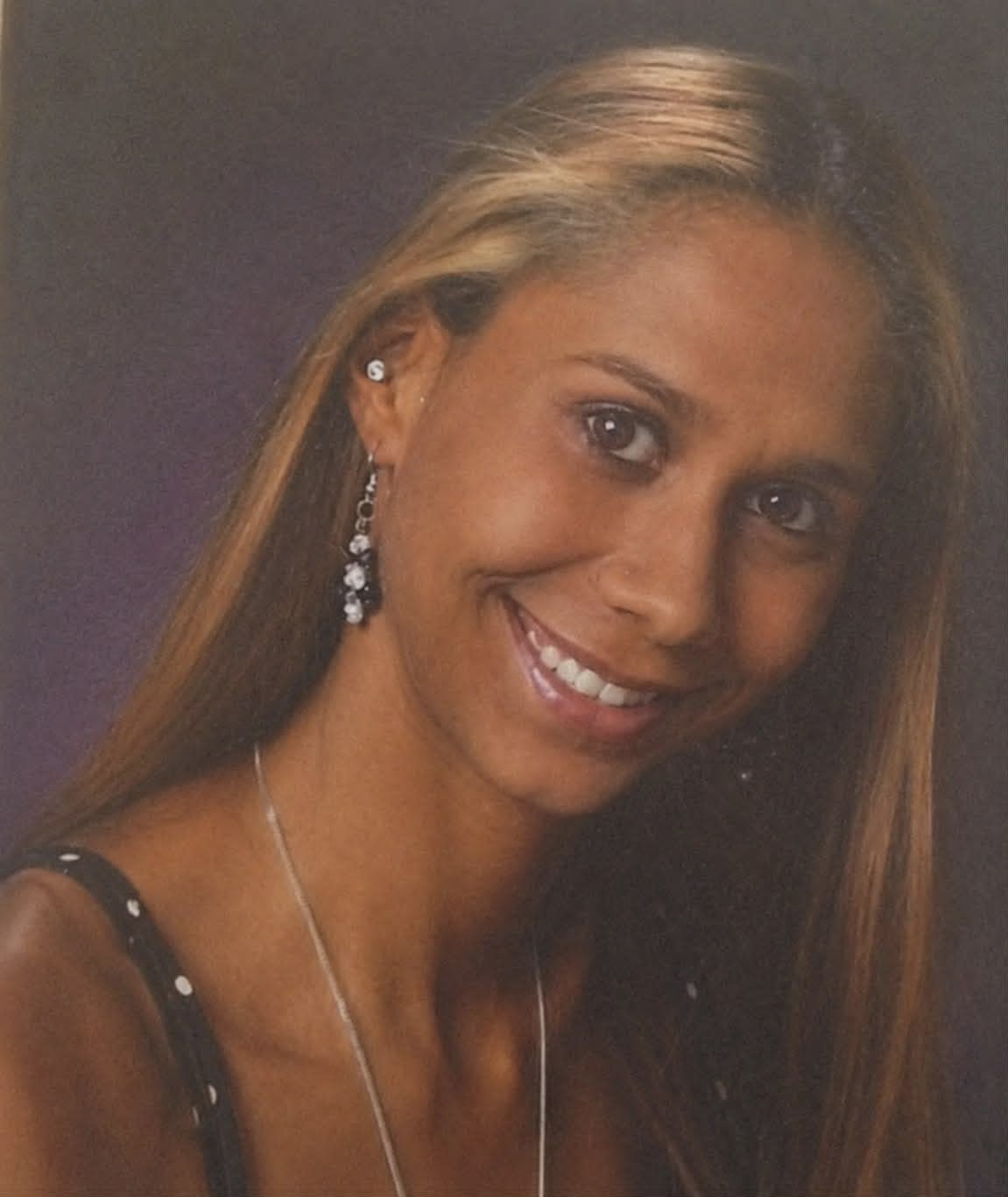
(Aboriginal woman Monique Clubb who disappeared on 22 June 2013).
It was an otherwise ordinary day, just after 3 pm on a Saturday afternoon, in Beenleigh Marketplace, in Logan, just outside of Brisbane.
The small shopping centre is next to Beenleigh’s train station (its main lines go either through to Central station, or to the Gold Coast); and on the other side, is the sprawling Hugh Muntz Park.
To get there, you take an exit from the Pacific Motorway, which can also take you either to the Gold Coast and into northern New South Wales, where along the highway there have been many unsolved homicides or disappearances of women, or, in the opposite direction, towards Ipswich.
It was not a typical space of disappearance. This place was not remote, it was not isolated, it was broad daylight, there were CCTV everywhere, and also, it was less than three hours until the centre closed, and so there were still many people around, either going to the medical centre, or the pharmacy, or Woolies, or Big W, or Spendless Shoes, or Donut King.
That’s to say, there were many people there who could have seen something, who could have been witnesses.
Maybe they thought it was an ordinary day, so routine that it is forgotten and indistinguishable from other Saturdays.
But for the family of Butchulla and Woppaburra woman Monique Clubb, it is this time, and this day, and this place - June 22, 2013, just after 3 pm, Beenleigh Marketplace - that has kept them suspended in grief for 13 years.
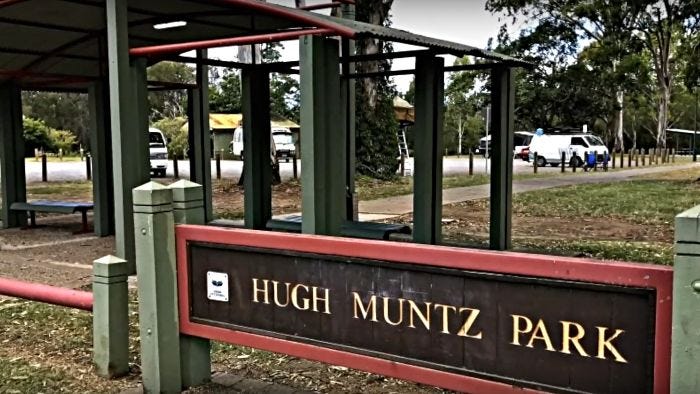
(Hugh Muntz Park next to Beenleigh marketplace)
All that is known, officially, is that just after 3 pm on 22 June 2013, a security guard who had been called to surveil Monique had witnessed her in the Hugh Muntz Park, right next to the marketplace, walking in the middle of the creek to the bank.
That was the last official sighting of Monique.
What happened at 3:30 pm? Or at 5 pm? What happened later that night? What happened the next morning, and the next, as Monique’s mother Sheena McBride and her five siblings grew increasingly worried as their phone calls went unanswered? And what happened the next week, and then days upon days, month upon months, years upon years until it reached 13 years of asking the same questions:
Where is Monique? What happened? Who is responsible? And when can we bring her home?
After that time, there is only an unknowing, and these four questions became subject to rumour, to unconfirmed sightings in social media comment sections, and to nightmares that never seem to end.
No one knows what happened after this time, this date and this place, because at an early point in their missing persons investigation, the Queensland Police investigation concentrated all their attention on the Hugh Muntz Park, assuming she had died there and had not been found.
“We feel like the police didn’t take my sisters’ case seriously,” Monique’s younger brother Timothy Clubb told Black Witness.
In all those years, until a coronial inquest in 2021, the Queensland Police failed to keep Monique’s family updated about her case.
“All we knew was where she was last seen, and other than that, I was told nothing,” Timothy says. “The police told us nothing.”
‘Big Sister’
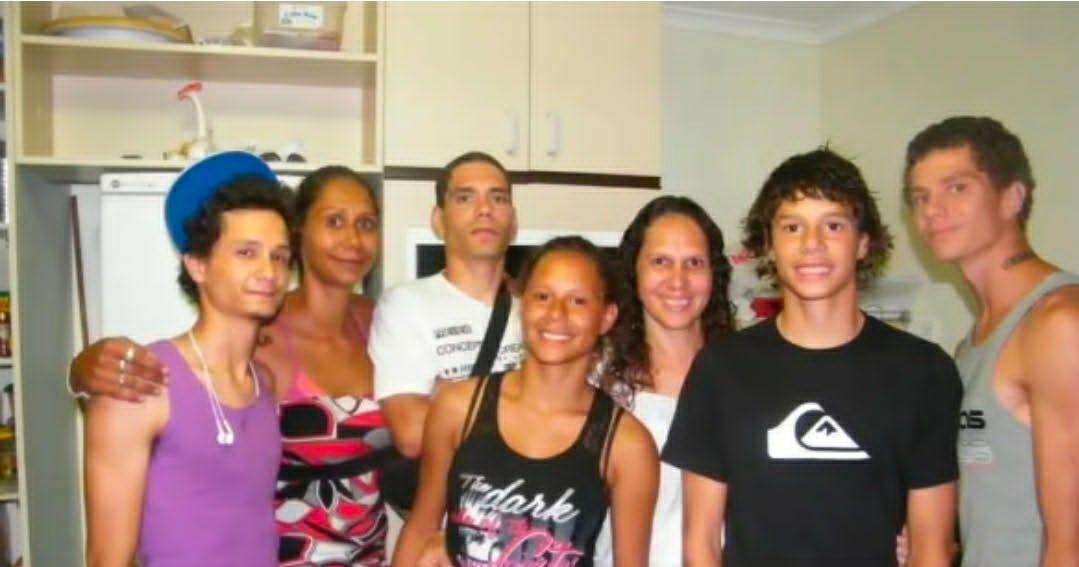
(Monique with her siblings and mum)
Monique was the eldest of six children: four brothers and a sister. She had grown up on Butchulla country in the coastal city of Hervey Bay and was like another mother to her younger siblings.
Monique had loved art in her youth and had also been very athletic - she had made the Queensland team for high jump and long jump and also was great at Cross Country running. She helped raise her younger siblings, when her mother Sheena McBride was studying.
Her siblings still refer to her as “big sister”, because despite the fact she is not here, that they do not know where she is, Monique will always have that role.
“I just remember the big love she gave all of us, to all her siblings,” her younger sister Minnie Clubb remembers.
“Like from our birthdays to Christmas, she made those special occasions really special. There were times that were tougher than others, but she always seemed to come through for mum and us kids.”
Timothy also remembers how Monique would look out for her siblings and mum.
“She always went above and beyond to make sure there was food in the house and we were safe,” Timothy says.
Monique was also always in close contact with her family, and in particular, her mother Sheena McBride, who she was extremely close to. She would talk to her mother several times a day and was often contactable on her phone.
This is why, when Sheena tried calling her, and calling her again, that afternoon on 22 June 2013, and the calls didn’t go through, her family knew that something was very wrong.
Monique had left Hervey Bay on June 20 with three other people, and they had travelled down the highway, stopping in Deception Bay where they met a non-Indigenous man, who had driven Monique to the Brisbane city. Monique had spent the night of the 21st of June in Brisbane’s Southbank.
Timothy remembers speaking to Monique the night before her disappearance, when she was in Brisbane, and her telling him she was staying at a hotel.
“She was trying to make out, saying I’ll be back home tomorrow. The trip is taking a bit longer than usual. But I’ll get back as soon as I can.”
It would later emerge at the coronial inquest that Monique had spent the night outside a hostel in the area, where she had met another non-Indigenous man who would accompany her to Beenleigh by train the next day. The two were picked up and driven to the train station by the non-Indigenous man that had brought Monique to Brisbane.
Years before, Monique had been in a devastating car crash, and she had been medicating her pain with opioids, which had led to a drug addiction.
Although she was suffering from the addiction, she had never taken it home to her siblings. She had also been incarcerated a few months prior, where in jail, she would write letters and birthday cards to her siblings.
She had been criminalised in Hervey Bay and was highly visible to police there.
The next morning, on 22 June 2013, was the last time that Sheena McBride, Monique’s mother, spoke to her.
Sheena remembers that call. Monique had told her she as coming home that afternoon.
But she never did.
Missed Calls
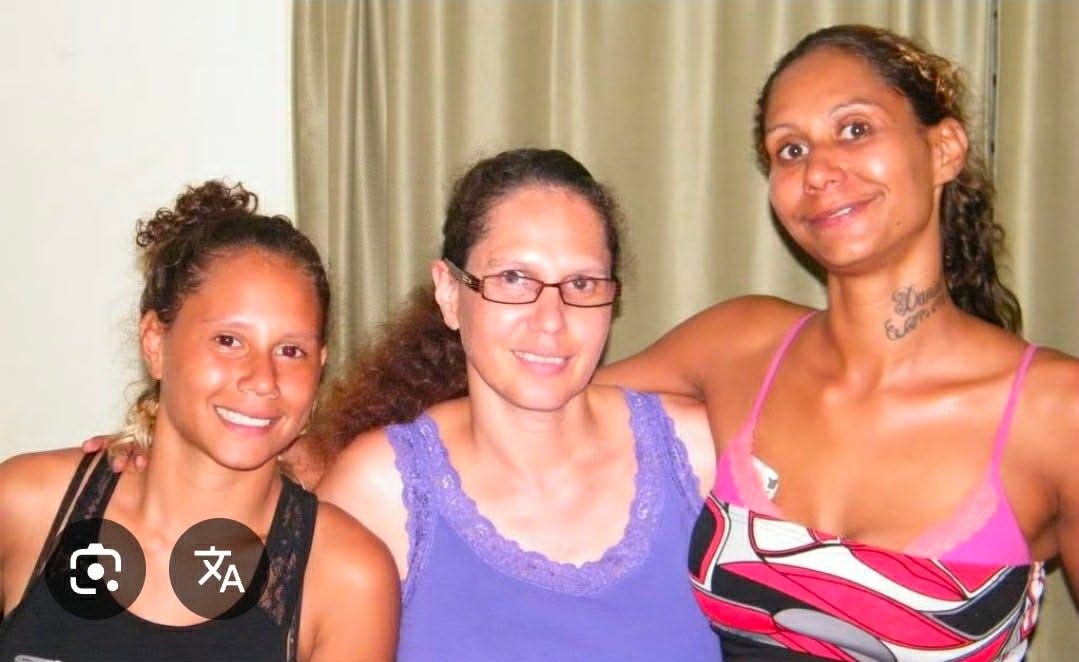
(Monique Clubb (right) with her mum Sheena and younger sister Minnie)
That afternoon, 22 June 2013, Sheena tried ringing her daughter but grew increasingly worried when she didn’t answer. It was out of character for her.
Timothy, who was only a teenager, also started getting worried. He had a strange feeling in his gut that something was wrong.
That day, on Saturday he was at his mate’s house when he got a weird feeling.
“My phone died and I knew her number by heart. It kind of felt like a kick in the guts, a weird feeling. So, I said (to my mate), can I borrow your phone? I need to make a phone call. And the phone didn’t answer. That’s how, I just felt something. I just felt like something was up.”
That afternoon, Sheena had also grown increasingly concerned. Timothy says:
“Mum knew straight away I’m pretty sure. Because that Saturday she came up and said like ‘Monique’s not answering her phone, they’ve fucking got her. She’s gone.”
Sheena went to the Hervey Bay police station but was sent away.
“I know Mum had to wait 24 to 48 hours prior to making a report, and then from there, I’m not quite sure procedures they ended up going with and following up,” Minnie told Black Witness.
“But that was one of the biggest crucial part, the first couple of days, to get as much evidence and track them down. Those early hours do matter. That’s where the system failed big sister there as well.”
And even then, the police failed in keeping Monique’s family updated about the progress of the missing persons investigation.
As Monique’s sister-in-law Angela Gala says
“In almost five years, there was not one police officer or liaison officer that knocked on the door to offer support to any single person in that family. And I can vouch to that as someone who was in that house, day in and day out.”
Instead, like many other families of disappeared persons, the family began to search. They made the four hours trip down the highway to Beenleigh. They did their own investigating in the absence of police; they travelled and searched the area, asked questions of the security guards at the marketplace, members of the family started their own Facebook page calling for information, they reached out to missing persons organisations and Sheena even collected phone records.
At the time, the QPS Missing Persons’ Unit Damiel Powell was quoted in the media stating that her case was already being prepared for the coroner, telling the Fraser Coast Chronicle:
“At this time, we have no evidence to indicate it is suspicious.”
But the family knew that made no sense, because of the fact, Monique would never disappear of her own violation. She was ‘big sister’, and regardless of what was happening in her life, she always stayed in contact with her mum and siblings.
But very early on, the Missing Persons investigation was closing.
At the inquest, Sheena McBride told the court:
“I reported her missing to a uniformed officer (at Hervey Bay), then they wanted me to do a coroner’s report. The lawyer said it’s too soon. It’s only two weeks.”
When a coronial inquest is compiled, it effectively signals the end of an investigation. With a month of Monique’s disappearance, the Hervey Bay CIB had begun compiling the report, and it was handed to the court the next year.
At the inquest, the Missing Person Unit’s Damien Powell had said the report had been compiled after the ‘dust had settled’, even though for her family, the dust could never settle.
It was another seven years before the inquest, and in that time, the family were told little.
“We knew where she was last seen, and that she had been at Beenleigh. But we didn’t know any detail about the police investigation, until the inquest,” Timothy says.
The Inquest
In 2021, Monique Clubb’s inquest was held in Southport. It just so happened to be starting in the same week as another disappeared Aboriginal woman - Kokoberra woman Ms Bernard, who had been disappeared four months before Monique, in Coen, Far North Queensland.
Like Monique, Ms Bernard was also last seen in the company of a white man. Last year, a non-Indigenous man was charged with her murder. She is still disappeared.
Both women had been long-term ‘missing persons’ cases, and both women had QPS ‘Missing Persons Alerts’ that used their mug shots rather than the pictures of who they were in life.
At the inquest to Monique’s disappearance, which was held over five days in December 2021, a narrative of Monique’s last days emerged, constructed by CCTV surveillance footage from the train station, the medical centre, the marketplace, the medical centre staff and doctor, the security guard and the police.
The court heard how she had arrived in Beenleigh train station with a non-Indigenous man at 12:10. She had come to the area to go to the medical centre, where she saw a doctor, who prescribed her Fentanyl, which Monique purchased from the pharmacy. Monique had then gone to a toilet at 2:27 pm, where she had stayed in there for a period of time.
At that point, the non-Indigenous man was seen leaving the marketplace and going to the train station, where he was also recorded on CCTV getting off the train at South Brisbane at 3:30 pm.
Monique then left the toilet at 2:55 pm and walked next door to Spendless Shoes, where staff there called the security on her, claiming she was intoxicated.
It was the security guard who was the last official sighting. He had followed her out of the marketplace, where he had walked to the rear of the building, and then the other side, near the Hugh Muntz Park. He had seen a group of young people who told him a young Aboriginal woman had jumped over the wall into the park.
The security guard had looked out into the creek and had seen Monique walking in the middle of the creek, towards the other bank, where she had stumbled but was not injured.
When asked at the inquest whether Monique had appeared intoxicated, he had said straight away: “No”.
‘The Park’
On attending the inquest, back in 2021, I was struck by how much the police investigation focused on Monique’s disappearance as a fault of her own doing, and that the police were considering this a case of a drug overdose in a park, rather than a suspicious disappearance with a potential perpetrator.
The police searched the Hugh Muntz Park several times, as well as reviewing the initial search area but they did not find her or her phone, or any further trace of Monique.
They did not triangulate her phone, claiming that her disappearance did not meet the criteria of “grave and imminent”.
The racialised assumption by police that Monique was ‘intoxicated’ impacted the investigation, narrowing it to the park. In her findings at the inquest, Coroner Jane Bentley had written:
Police reports concluding that she died in the park relied on misconceptions that she was very intoxicated, that she was running away [from the security guard], that she was last seen entering thick bush in the park and that the bush and waterways had not been thoroughly searched. In fact, CCTV obtained early in the investigation revealed that she was not running away and she did not appear to be very intoxicated.”
In the report to the coroner, investigators had claimed that the most likely scenario was that Monique had died in the park of an “overdose,” even though expert witnesses at the inquest had testified that this version of events was unlikely.
That included the two search and rescue officers, one of whom was Queensland’s, preeminent search and rescue expert Dr Jim Whitehead, who had told the court that they were 100 percent certain Monique was not in the park, and that if she had overdosed, then they would have found her quickly. Their insight was known to investigators at the time but was disregarded.
Dr Whitehead had also reviewed the search for Ms Bernard, and had later said of both cases at Ms Bernard’s inquest, that the police had not found anything because there was nothing in that area to be found.
In Monique’s case, the racialised assumptions about ‘intoxication’ led to the police halting their investigation too early, which meant critical avenues were not pursued, such as further evidence on how Monique may have left the area.
Coroner Bentley had also written:
The conclusion of Sergeant Nelson (the search and rescue officer) that Ms Clubb was not in the park was disregarded by or not known to other police officers who concluded (based on some inaccurate information as stated above in regard to Detective Senior Sergeant Powell’s report) that Ms Clubb had died of an overdose in the park and her body had not been located.
Due to that conclusion, the investigation was effectively discontinued at a time when it may have been possible to obtain further evidence as to whether she left Beenleigh, and if so, her final whereabouts.
In addition, there were critical failures in the investigation, including confusion over who had carriage over it (it was supposed to be Hervey Bay, where Sheena had made the Missing Person’s report), errors in the police reports to the coroner, and the fact that police had not collected key witness statements, and had not checked bus or taxi records which could have shown Monique leaving Beenleigh.
This conclusion also meant that police did not follow up on obtaining CCTV footage at the train station, and in fact lost that footage, which may have shown Monique leaving later by train.
The investigation has continually frustrated and compounded the family’s trauma.
One time, the family saw a comment from a woman in Beenleigh, who had said she had seen Monique at the train station waiting to get picked up by a friend.
“We commented on the Facebook post, and she told us she sent it to police, and even told us the police number and all that. But when we went to the inquest, all them cameras on the train station stopped at 3 o’clock,” Timothy says.
“Even if we’re not sure what time that phone call came through, the (police) still didn’t follow it up. And that’s someone from the public.”
Minnie agrees:
“The (police) didn’t follow through with the CCTV footage, or hold anyone accountable or anything. They could have asked people more questions, like the lady from (Spendless Shoes), who the police didn’t obtain a witness statement from.
“They looked over the footage a bit, and that was it. Just to see which direction she’s gone and nothing further.”
At the inquest, counsel-assist to the coroner recommended that the coroner find that Monique had died by foul play.
Coroner Bentley took only a month to deliver her findings, which she handed down in ten minutes. She gave an undetermined finding, stating that Monique had likely passed shortly after 22 June 2013. She delivered only two recommendations focused on police protocol, and made no further recommendations that the police should pursue other avenues of investigation to find Monique.
After waiting seven years for an inquest, the family again were left with few answers, including from those who were with Monique from Hervey Bay, to Brisbane to Beenleigh.
And so, they are campaigning again for the Queensland police to investigate the case properly, like they would do for other missing persons.
Calls for a Reward
Monique is one of the many Aboriginal and Torres Strait Islander women and girls whose disappearances or suspicious deaths or unsolved killings are not taken seriously by the police, the state and the media.
The issue not taken seriously enough to count the number of those killed or disappeared.
The first federal inquiry into Missing and Murdered Indigenous Women and Girls, which concluded in 2023, did not provide a dataset; instead it gave 10 recommendations, the first of which is that we find appropriate ways to ‘commemorate’ those who had been killed.
So, in the absence of this, and in the national silence that engulfs the deaths and disappearances of Indigenous women, Monique’s family have been the ones to search, and they have been the ones to rise and tell her story for the nation to hear.
This month, Monique’s family launched a campaign to push the QPS and Qld Police Minister to issue a $1 million reward for any information relating to Monique’s disappearance, which they say will incentivize those who may have information to come forward.
The Disappeared Project co-founder Martin Hodgson, who has been assisting the family for five years, says there has been multiple attempts to obtain a reward in the long fight for justice for Monique.
"There is a history of rewards not being offered for disappeared Aboriginal people, which runs counter to the research in cases like this, where known witnesses hold vital information.
“Rewards are a proven method to solve the case.”
The family have never believed that Monique just vanished without a trace; they don’t believe she would just up and leave.
They have always felt that someone was responsible for Monique’s disappearance, and that someone knows what happened to her.
They’ve launched a new campaign on social media, and they say they won’t rest until they can bring Monique home, and fight for justice for her.
For thirteen years, they’ve had to deal with the trauma of unknowing. They have been caught in the date, in that time, in that place.
“It’s been thirteen years. It’s time to bring our sister back home,” Minnie says.
Please sign the petition calling for a reward for information relating to Monique Clubb’s disappearance and follow the family’s campaign via social media.
The author is also a co-founder of the Disappeared Project.
So sad to read this heartbreaking story. I truly hope there is some peace for Monique and her family 🩵
Signed the petition.