

His spirit went home: The death in custody of Stevie Lee Nixon-McKellar
In 2021, a neighbour called the cops on a young Aboriginal man sitting in a car. Within an hour, he was pronounced dead. And now, the Qld Coroner refuses to release the police body cam footage.

This is the first installment in a week-long series into the police killing of Gungarri man Stevie Lee Nixon-McKellar.
TWO weeks after Toowoomba police officers killed Stevie Lee Nixon-McKellar, his family gathered on the street where he said his last words: help me, help me, you’ve got me.
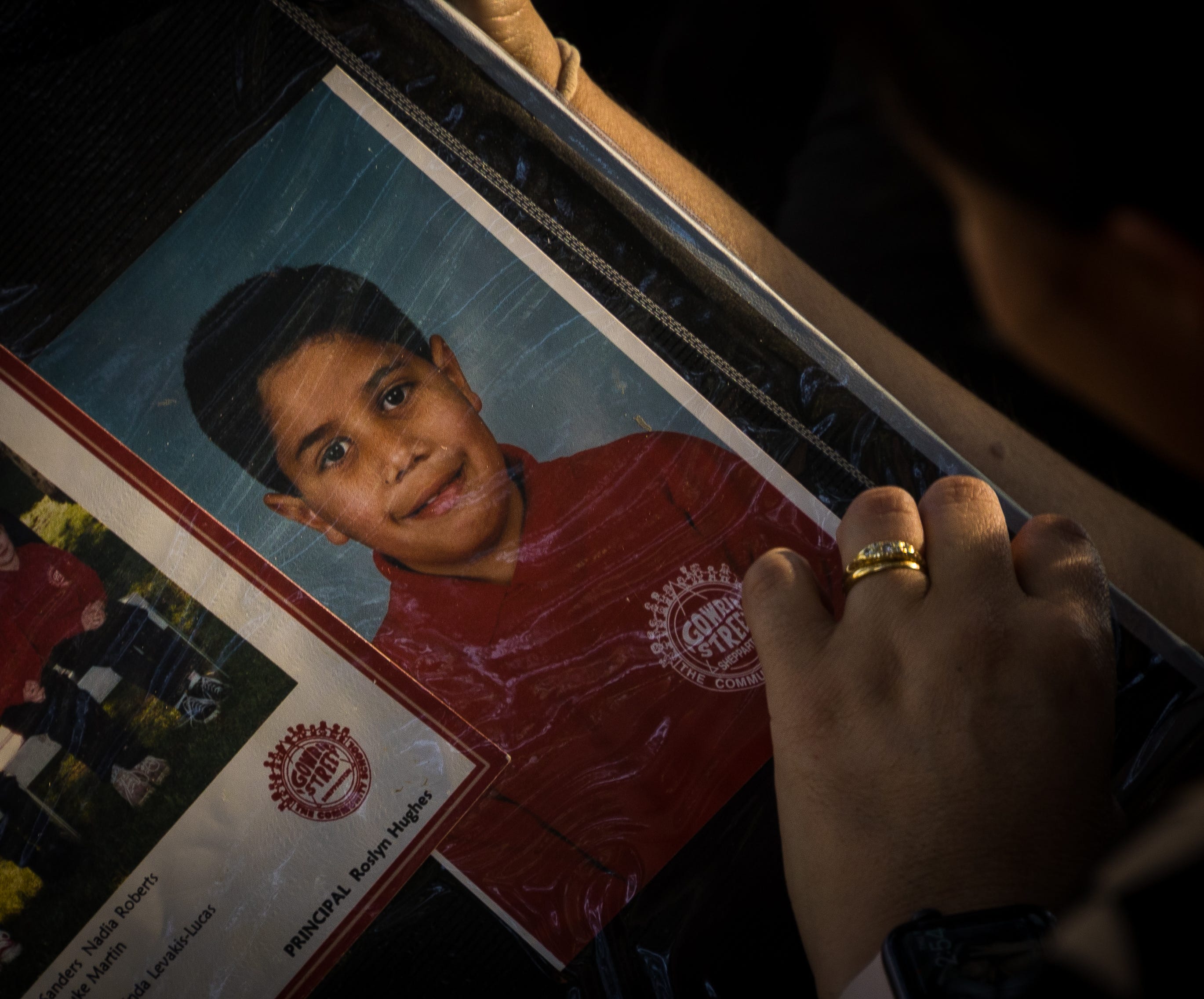
(Stevie Lee Nixon-McKellar’s mother Dr Raelene Nixon holds a photo of her son as a child. Image: Charandev Singh)
It was usually a quiet street, a cul-de-sac which ends next to a BMX track across from sprawling green parkland called the ‘Captain Cook Recreation Reserve’, not far from a small air strip where on occasion, light aircraft fly low.
But this day was solemn and grey, the clouds heavy and threatening a downpour.
Stevie Lee’s family had travelled a long way; his grandmother and aunties had driven in from his hometown of Mitchell, a four-and-a-half-hour drive west, and his mother, Dr Raelene Nixon, had flown in from Victoria, although she was not there on the street that day.
She had been forced into quarantine.
It was a year and a half after African American man George Floyd was murdered by a police officer in Minneapolis, sparking historic Black Lives Matter protests, and COVID border restrictions were still in place in Queensland.
At that point, Dr Nixon and her family had not been given any information about her son’s death beyond a QPS media statement released on 7 October 2021, the day he was killed.
It was the first time his death was confirmed; Dr Nixon had received it over Facebook Messenger from a relative before a Victorian police officer came knocking on her door hours later.
The statement had said:
“A man has died, and two officers have been injured… It is believed when officers attempted to arrest the 27-year old man, he suffered a medical episode and was declared deceased at the scene.
Dr Nixon had then been told Stevie Lee had been involved in a violent altercation with two police officers.
Even then, she knew it didn’t add up.
That was because, two days before his death, Stevie Lee had been in the hospital.
He had chronic asthma, and he had contracted pneumonia.
“When they rang and said he was in a violent altercation, I said he wouldn’t have been violent. I said even if he wanted to fight and bash two coppers, he couldn’t because he was too sick,” Dr Nixon said.
“That was why he was coming home to Mitchell,” his grandmother, Aunty Lynette Nixon told Black Witness.
She had spoken to him over the phone the night before.
He was going back to Gungarri country so he could recover and so someone could look after him.
Stevie Lee had come from a long line of Indigenous health experts.
Dr Nixon was completing a PhD in Indigenous health at the University of Melbourne, and her mother, Aunty Lynette, was legendary in Aboriginal health; she had co-authored numerous Gungarri language children’s books, had helped establish several key Aboriginal organisations, and had written a landmark text on Aboriginal health Binang Goonj- Bridging Cultures in Aboriginal Health.
The family knew about Indigenous health, but they also knew about racist violence and the reality of police brutality; they knew the experience of living between two stories; of navigating black and white worlds.
Now they were being told to accept two competing narratives from the police, two stories that contradicted each other.
“They were saying in one sentence, he’s superhuman, and he’s so strong and these two cops couldn’t bring him to the ground, and in the same sentence saying he had pneumonia and had heart disease and pre-existing medical conditions that meant he was destined to die anyway. But it has to be one or the other: you can’t be both.” Dr Nixon told Black Witness.
So that day on the street, two weeks after he died, they came for the Stevie Lee Nixon-McKellar who was known for being “cheeky” and “mischievous”, but who also was “the type to take in strays - whether people or animals” and had the special “ability to walk in other people’s shoes”. He was a person who would give you the shirt off his back, according to Dr Nixon.
They came for the Stevie Lee, who “was such a character”, according to Aunty Lynette and who loved her so much his last post on Facebook was about how much he looked up to his grandmother.
And they came for the Stevie Lee who would always “make us laugh, he was the life of the party”, according to his aunt Saraeva Mitchell, and who was the best uncle, the Stevie Lee who would pick up his little niece, along with a bottle and nappies, and play with her all afternoon.
They came for the Stevie Lee who was born in 1993, a year after the Royal Commission into Aboriginal Deaths in Custody was handed down; the commission that said it was largely over-incarceration rather than police brutality that was killing young black men.
They came for the Stevie Lee who should still be here.
And so, they gathered there for the Stevie Lee they knew, on the street where he was killed.
And alongside them were local mob from Toowoomba who came to pay their respects at the street where he had died; local mob who said they had come because they also knew the reality of police brutality. Months earlier, the Toowoomba police had killed another young Aboriginal man on a Toowoomba street - Ashley Washington, who was only 31.
But even then, as they came to mourn, they were still under surveillance from undercover police who were watching them from across the street.
“They had a few just stationed around,” his aunty Saraeva told Black Witness. “They probably thought we were going to cause trouble.”
“But we just wanted to send his spirit home,” Aunty Lynette says.
“I knew he was still there because it was quick and it was violent, so he couldn’t move from there. I talked to the family, and they organised a smoking ceremony where he passed. We got quite a crowd there.”
And then, as the smoking ceremony commenced, something strange happened.
Everyone there saw it; it was caught on the NITV news camera.
“The sky cleared; it went off that grey, and then this really soft breeze came,” Aunty Lynette said.
“And then we could see the smoke going west.
“We all just sat around and cried then.”
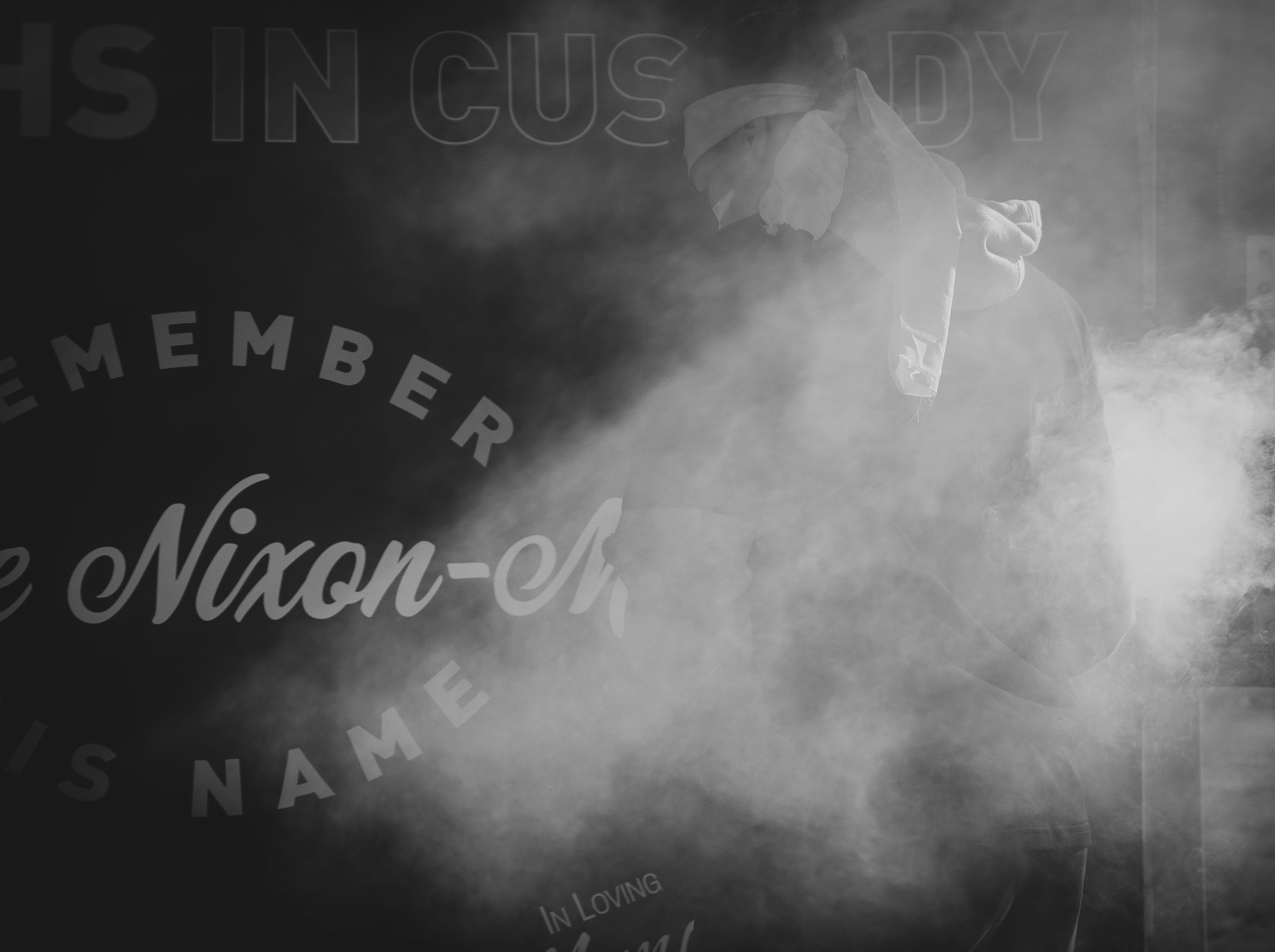
(A rally for Stevie Lee at his inquest in 2023. Image: Charandev Singh).
When Aunty Lynette made it back to Mitchell, and walked into her house, she realised she could feel him there, throughout the house.
“He was here,” she says. “He beat us home.”
Stevie Lee was completing his journey out west towards Gungarri country.
He had made it home.
The next installment of the #JusticeforStevieLee series will be published tomorrow.
In the meantime, you can support the family’s campaign to release the bodycam footage of his death, by signing the petition.
Devastating and beautifully written Amy! You give our people our dignity and our spirit back ❤️
Amy - again how movingly you have written of this young man. Many years ago at the end of the 1980s I put together a couple pf anthologies of Australian writing - of our rich cultural and Indigenous diversity. This piece would have automatically been included were I doing it to-day. But that was 37 years ago - published by OUP in 1990 (Made in Australia). There are so many aspects of the underbelly of racism in our society especially within police and prison services/forces! This essay of respectful memorialisation could easily be the basis for an entire unit of study on the whole invader, colonisation, dispossession story of First Australians. I know this is not the intent - but in fact all of your essays as I have read them over the years have all struck me as teaching/learning expressions. Sincere condolences to the young man's family and thanks to you. Jim K